


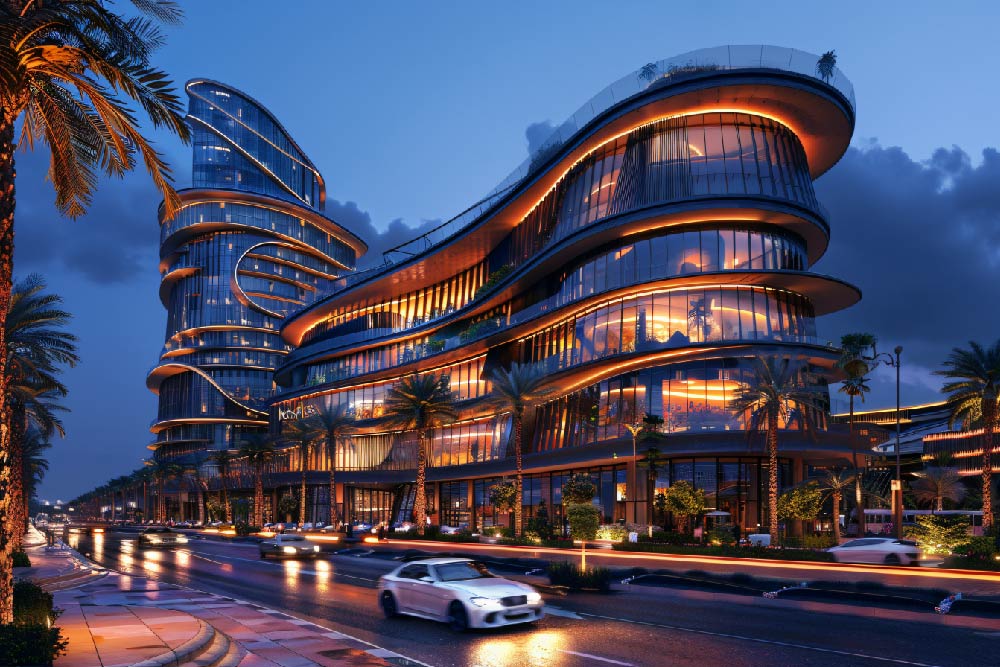
Indian real estate is evolving beyond standalone towers and gated enclaves. For today’s discerning HNIs and UHNIs, the most attractive opportunities lie in developments that combine residential, commercial, retail, hospitality, and wellness elements into one integrated ecosystem. These mixed-use luxury projects bring together workspaces, homes, and leisure in a way that reflects global urban living trends.
The investment story is equally compelling. In Q1 2025, mixed-use real estate attracted USD 191 million in institutional inflows in India, compared with just USD 42 million in the same period earlier (Economic Times). Such momentum underscores how this asset class is moving from niche to mainstream. Before assessing growth numbers, however, it is important to understand what mixed-use luxury truly means and what creates its premium.
Mixed-use luxury developments go beyond simply consolidating various functions under a single roof. They are curated ecosystems where residential, commercial, retail, and hospitality assets work in synergy. Formats range from vertical towers with stacked uses to horizontal districts built around transit and cultural spaces.
What differentiates them in the luxury space is the attention to lifestyle and service. Branded residences with concierge access, hotel-grade hospitality, wellness clubs, and international dining elevate the standard of living while also creating enduring demand.
Several factors contribute to the premium these projects command:
With these fundamentals in place, mixed-use luxury developments stand uniquely positioned to outperform. The next step for investors is to assess why this segment offers such strong advantages compared with conventional assets.
For HNIs and UHNIs, the appeal of mixed-use luxury lies in both yield and resilience. While conventional urban residential assets typically generate 2.5-3.5% annual returns, hospitality-integrated or mixed-use projects often deliver 8-9%, especially when supported by professional leasing or short-term rental programmes. (Commercial Design India)
Beyond higher yields, these assets diversify income across residential, retail, office, and hospitality streams, reducing reliance on a single sector. Capital appreciation is stronger due to placemaking, brand partnerships, and infrastructure proximity, while liquidity is enhanced by a wide buyer base ranging from end-users to institutions.
Naturally, both private and institutional capital are increasing their exposure to this segment. The focus now is on where this growth is taking shape most prominently.
Institutional capital signals a decisive shift. Investment into mixed-use real estate in India surged in Q1 2025, and the segment’s share of total real estate investment is projected to reach 18-20% by the year’s end. (Economic Times) This reflects a structural reallocation of capital towards integrated formats.
The trend is visible at the city level too. Pune has recorded a 20-30% rise in mixed-use projects over the past five years, with Hinjewadi, Kharadi, Magarpatta, and Baner emerging as leading hotspots (Times of India). These hubs highlight how integrated developments can reshape micro-markets by creating new demand drivers and lifting values across asset categories.
Fuelling this growth are powerful demand catalysts – hybrid work patterns, the rise of 20-minute neighbourhoods, a rebound in tourism, and the growing pull of experiential retail. These forces make it evident that mixed-use luxury will keep expanding across India’s leading cities. With the growth story clear, the focus now shifts to how the future of this asset class will take shape.
The next five years will be decisive in defining how mixed-use luxury evolves across India. This cycle will focus on scale and the qualitative shifts that determine which projects keep investors interested.
For investors, the message is clear: early commitment to high-quality, professionally managed mixed-use luxury assets will unlock superior returns and long-term resilience.
At SQUAREA, we provide curated access to India’s most exclusive mixed-use luxury developments and guide investors through every stage of the journey, from evaluation to execution. For tailored advice and first access to upcoming opportunities, connect with us at hello@squarea.io or call +91 90 9641 9641.
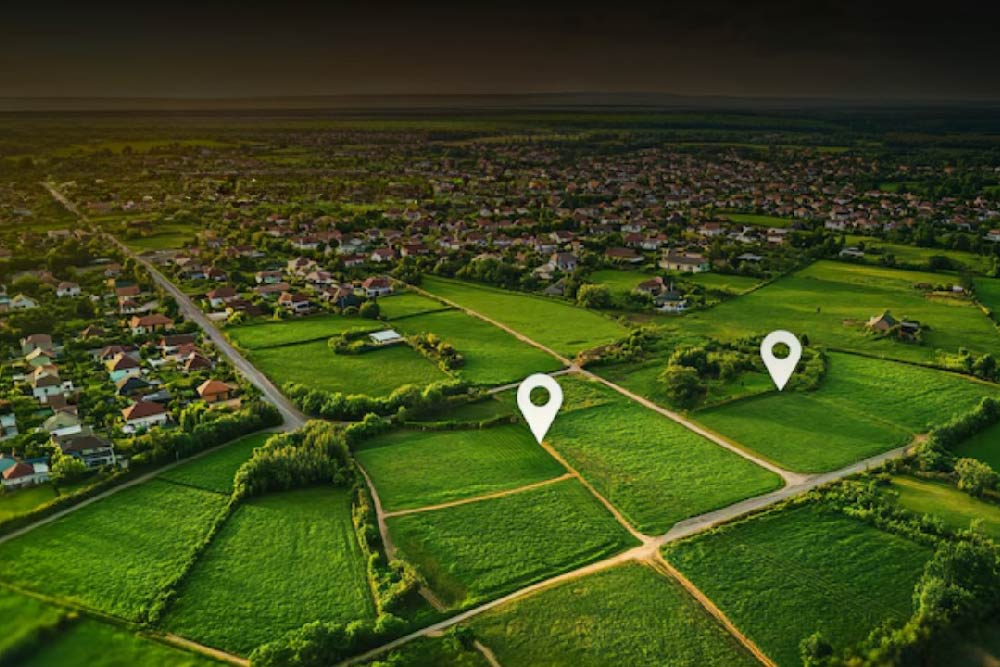
In recent years, plotted developments have re-entered investment conversations across India. While apartments and integrated townships dominated urban expansion for over a decade, discerning investors are increasingly revisiting land-led formats. The appeal is not merely lifestyle-driven - it is structural. Direct land ownership, lower density, capital appreciation orientation, and flexibility in development timelines are making plotted communities a strategic allocation within high-value portfolios.
For HNIs and UHNIs, plotted development is no longer viewed as fragmented land buying. It is emerging as a regulated, infrastructure-backed, developer-led format that blends land ownership with planned community living.
To understand its investment relevance, let’s first clarify what plotted development represents in today’s regulatory and market framework.
What Is a Plotted Development?A plotted development refers to a large land parcel acquired and legally structured by a developer, subdivided into individual plots with pre-approved layouts and essential infrastructure. Plotted developments typically include:
It shifts the asset from speculative land banking to structured investment-grade positioning. While structurally simple, plotted developments offer a fundamentally different return profile compared to conventional residential apartments.
How Plotted Developments Differ from Traditional Residential AssetsThe divergence lies in ownership structure, appreciation dynamics, and long-term supply characteristics.
| Parameter | Plotted Development | Traditional Apartments / Villas |
|---|---|---|
| Appreciation Driver | Primarily land-led appreciation with a minimal depreciation component | Value is partially tied to the building structure, which depreciates over time |
| Ownership Structure | Direct and clearly defined land title | Undivided share in land with super built-up allocation |
| Construction Flexibility | Owner may build immediately, defer construction, or hold for capital growth | Construction is pre-completed; no flexibility in structural timing |
| Supply Dynamics | Low-density format with finite horizontal expansion | High-density vertical supply can expand through new launches |
| Investment Profile | Capital preservation and long-term land appreciation-oriented | A combination of lifestyle consumption and moderate capital growth |
These structural distinctions position plotted developments closer to long-term capital preservation assets rather than yield-focused residential products. Which explains why HNIs are increasingly allocating strategic attention to plotted communities.
Why HNIs Are Increasingly Considering Plotted DevelopmentsAmong high-net-worth families, plotted developments are being evaluated as strategic land exposure. Here’s why:
In an environment where built inventory cycles fluctuate, land-backed formats offer a different risk-return alignment. However, plotted development requires disciplined evaluation before capital allocation.
Key Factors to Evaluate Before Investing in Plotted DevelopmentsFor investors, due diligence remains paramount. The following elements require careful assessment:
When structured correctly, plotted developments can function as strategic land banking vehicles. While this asset class is nationally relevant, its performance varies significantly by city and growth corridor. This is where Pune presents a compelling case.
Why Pune Is Emerging as a Plotted Development HotspotPune’s expansion trajectory has created ideal conditions for organised, plotted communities.
Plotted developments offer a structured form of direct land ownership within planned, infrastructure-backed communities. For HNIs and UHNIs seeking long-term capital appreciation and wealth preservation, this asset class can serve as a strategic addition within a diversified real estate portfolio.
In growth corridors such as Pune, where infrastructure expansion continues to reshape urban boundaries, plotted communities are moving beyond peripheral alternatives to become well-positioned investment opportunities.
At SQUAREA, we offer curated access to Pune’s most strategically positioned plotted and residential developments aligned with long-term infrastructure growth. For tailored investment guidance, reach out at hello@squarea.io or call +91 90 9641 9641.