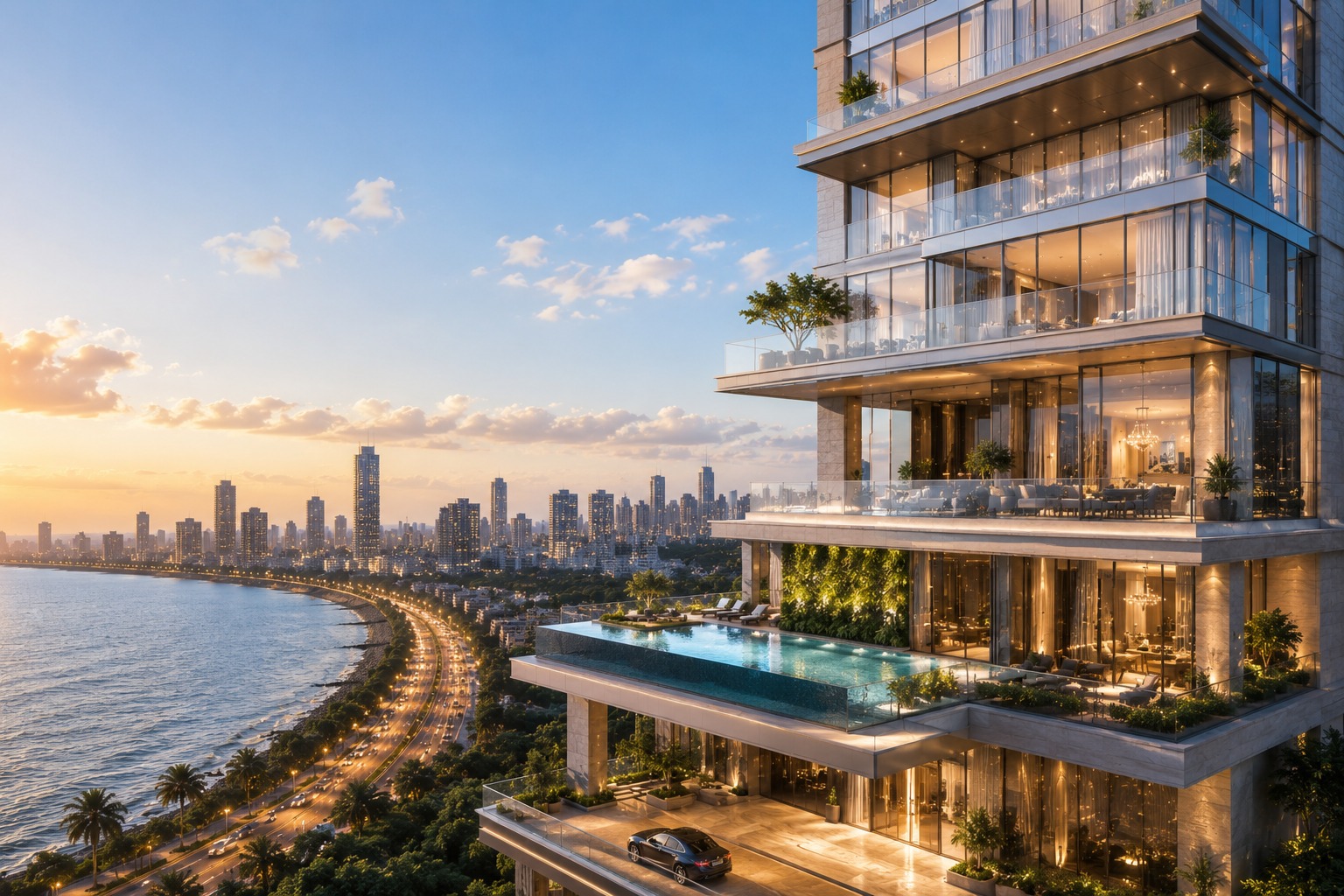



Across India’s top real estate markets, a new type of buyer is emerging—one who sees ultra-luxury real estate in India not just as a prized possession, but as a planned component of long-term wealth preservation. What was once viewed as a reward for success is now being evaluated through the lens of return potential, capital security, and generational transfer. These aren’t just homes anymore—they’re carefully selected, performance-backed assets in a well-diversified financial portfolio.
This transformation is backed by strong market data. In 2025, 55% of HNIs and UHNIs cited capital appreciation as their primary reason for investing in luxury real estate, up from 44% in 2024 (Business Standard). In other words, real estate investment by HNIs and UHNIs is not just about buying homes—they’re buying into long-term value.
With the appetite for capital appreciation growing stronger among HNIs and UHNIs, the shift is clear: luxury is being repurposed as strategy.
To understand why ultra-luxury real estate in India is being repositioned as a wealth preservation tool, we must start with the shift in investor intent. Gone are the days when high-end homes were acquired primarily for their aesthetic or lifestyle pull. Today’s luxury buyers, especially HNIs and UHNIs, are entering the market with sharper intent:
This mindset shift—from lifestyle acquisition to long-term asset selection—has also redefined how HNIs are leveraging their luxury homes. It’s no longer just about owning prime real estate, but about optimising its financial potential.
The evolving treatment of luxury homes doesn’t stop at capital preservation. When optimised correctly, ultra-luxury homes are becoming performance assets, offering attractive yields alongside emotional and lifestyle value. Especially in high-demand locations or Branded Residences in India, they’re generating sizeable returns.
This yield-driven approach is strengthening real estate’s position within diversified portfolios. For many HNIs, these properties now sit alongside equities, bonds, and alternates—not just as lifestyle holdings, but as performance-driven capital plays with high-end real estate ROI.
For India’s HNIs and UHNIs, the portfolio mix is evolving. Equities and private investments still play a role, but real estate investment by HNIs and UHNIs is being reintroduced as a core allocation. HNIs are now allocating a larger share of their portfolio to real estate, particularly in the premium and ultra-premium segments (Financial Express).
Here’s what’s driving this shift:
This strategic reallocation of wealth into real estate is part of a wider trend. As India’s market matures and buyer sophistication deepens, the ultra-luxury segment is fast becoming a must-have in modern wealth management.
Looking ahead, the fundamentals supporting luxury real estate investment in Pune and other metro and Tier 1 cities remain solid. The Indian real estate sector is projected to touch $1 trillion by 2030, with residential making up a significant portion of this growth (Financial Express).
And as investment continues to mature, so will the nature of luxury real estate:
What was once a niche asset class is now on its way to becoming one of the most reliable wealth preservation tools for India’s elite.
At SQUAREA, we guide investors in identifying ultra-luxury real estate in India that offers more than a signature address. They deliver long-term capital preservation, high-end real estate ROI, yield opportunities, and legacy value. Whether you’re reallocating capital, entering a new market, or acquiring a family asset with future-proof potential, our advisory-led approach connects you to India’s most credible ultra-luxury real estate opportunities.
To explore how the right property can preserve and grow your wealth, reach out to us at hello@squarea.io or call +91 90 9641 9641.

In recent years, plotted developments have re-entered investment conversations across India. While apartments and integrated townships dominated urban expansion for over a decade, discerning investors are increasingly revisiting land-led formats. The appeal is not merely lifestyle-driven - it is structural. Direct land ownership, lower density, capital appreciation orientation, and flexibility in development timelines are making plotted communities a strategic allocation within high-value portfolios.
For HNIs and UHNIs, plotted development is no longer viewed as fragmented land buying. It is emerging as a regulated, infrastructure-backed, developer-led format that blends land ownership with planned community living.
To understand its investment relevance, let’s first clarify what plotted development represents in today’s regulatory and market framework.
What Is a Plotted Development?A plotted development refers to a large land parcel acquired and legally structured by a developer, subdivided into individual plots with pre-approved layouts and essential infrastructure. Plotted developments typically include:
It shifts the asset from speculative land banking to structured investment-grade positioning. While structurally simple, plotted developments offer a fundamentally different return profile compared to conventional residential apartments.
How Plotted Developments Differ from Traditional Residential AssetsThe divergence lies in ownership structure, appreciation dynamics, and long-term supply characteristics.
| Parameter | Plotted Development | Traditional Apartments / Villas |
|---|---|---|
| Appreciation Driver | Primarily land-led appreciation with a minimal depreciation component | Value is partially tied to the building structure, which depreciates over time |
| Ownership Structure | Direct and clearly defined land title | Undivided share in land with super built-up allocation |
| Construction Flexibility | Owner may build immediately, defer construction, or hold for capital growth | Construction is pre-completed; no flexibility in structural timing |
| Supply Dynamics | Low-density format with finite horizontal expansion | High-density vertical supply can expand through new launches |
| Investment Profile | Capital preservation and long-term land appreciation-oriented | A combination of lifestyle consumption and moderate capital growth |
These structural distinctions position plotted developments closer to long-term capital preservation assets rather than yield-focused residential products. Which explains why HNIs are increasingly allocating strategic attention to plotted communities.
Why HNIs Are Increasingly Considering Plotted DevelopmentsAmong high-net-worth families, plotted developments are being evaluated as strategic land exposure. Here’s why:
In an environment where built inventory cycles fluctuate, land-backed formats offer a different risk-return alignment. However, plotted development requires disciplined evaluation before capital allocation.
Key Factors to Evaluate Before Investing in Plotted DevelopmentsFor investors, due diligence remains paramount. The following elements require careful assessment:
When structured correctly, plotted developments can function as strategic land banking vehicles. While this asset class is nationally relevant, its performance varies significantly by city and growth corridor. This is where Pune presents a compelling case.
Why Pune Is Emerging as a Plotted Development HotspotPune’s expansion trajectory has created ideal conditions for organised, plotted communities.
Plotted developments offer a structured form of direct land ownership within planned, infrastructure-backed communities. For HNIs and UHNIs seeking long-term capital appreciation and wealth preservation, this asset class can serve as a strategic addition within a diversified real estate portfolio.
In growth corridors such as Pune, where infrastructure expansion continues to reshape urban boundaries, plotted communities are moving beyond peripheral alternatives to become well-positioned investment opportunities.
At SQUAREA, we offer curated access to Pune’s most strategically positioned plotted and residential developments aligned with long-term infrastructure growth. For tailored investment guidance, reach out at hello@squarea.io or call +91 90 9641 9641.