



India’s premium residential investment market is entering a defining decade. With wealth creation at an all-time high and global investment confidence returning, the segment is expanding beyond traditional metros into new zones of aspiration. The country’s luxury residential market, valued at USD 57.87 billion in 2025, is projected to reach USD 98.04 billion by 2030, growing at a steady 11.12% CAGR. (Mordor Intelligence)
This surge is fuelled by infrastructure-led development, global lifestyle integration, and sustained interest from non-resident Indians (NRIs). What was once concentrated in Mumbai or Delhi is now diffusing across high-growth corridors, redefining the geography of luxury itself.
India’s Evolving Luxury Landscape
Over the past few years, India’s premium housing demand has shifted from location to lifestyle. Buyers now seek integrated neighbourhoods with branded residences, concierge services, and architectural innovation. Developers are responding with high-rise towers, expansive villas, and mixed-use formats that blend privacy, design, and amenities once exclusive to global capitals.
Mumbai still dominates with around 33% of India’s total luxury housing market, but cities like Hyderabad, Pune, and Ahmedabad are emerging as serious contenders. This diversification signals a broader maturity, one where luxury is defined by quality of life, not just postcode. (Mordor Intelligence)
As India’s urban evolution accelerates, the next phase of premium housing growth will be led by ten cities that combine infrastructure, affluence, and aspirational living.
Top 10 Indian Cities Poised for Luxury Real Estate Growth
Each of these destinations demonstrates strong fundamentals, from international connectivity and cultural capital to economic opportunity and liveability.
Mumbai remains the benchmark for premium real estate. Its South and Central zones, from Worli and Lower Parel to BKC, continue to command top-tier valuations. With luxury market share exceeding one-third of India’s total, the city’s vertical transformation, driven by redevelopment and sea-link infrastructure, ensures its continued dominance.
Delhi’s luxury housing market has climbed to the sixth spot globally in luxury home price growth, with a 6.7% value rise in Q4 2024 (GQ India). Localities like Lutyens Bungalow Zone, Golf Links, and Vasant Vihar remain timeless, while New Gurugram and Aerocity are fast becoming contemporary investment hotspots for next-generation buyers.
Hyderabad leads India’s luxury growth trajectory with a projected 13.12% CAGR through 2030. The city’s strategic IT corridor, coupled with its affordability-to-luxury transition, has made it a magnet for both HNIs and NRIs. Projects in areas like Jubilee Hills, Gachibowli, and Kokapet are setting new benchmarks for architectural design and liveability. (Mordor Intelligence)
Bengaluru continues to attract affluent homebuyers, driven by its cosmopolitan culture and economic resilience. High-end projects in Whitefield, Koramangala, and North Bengaluru combine modern aesthetics with sustainable living. The city’s growing base of tech entrepreneurs and expat executives ensures steady luxury absorption.
Once known primarily for its academic institutions, Pune has matured into a thriving hub for lifestyle and luxury living. Neighbourhoods such as Kalyani Nagar, Koregaon Park, Kharadi, and Baner are witnessing a wave of branded developments and designer residences. Its proximity to Mumbai, strong infrastructure, and cleaner air make it ideal for investors looking to buy luxury flat in Kharadi Pune and secure long-term growth.
Chennai’s luxury demand is concentrated in neighbourhoods such as Boat Club Road, Poes Garden, and ECR. The city combines cultural legacy with a growing appetite for contemporary design. Developers are increasingly adopting high-rise, sea-facing formats to cater to the evolving aspirations of global and domestic buyers.
Ahmedabad’s transformation into a luxury market has been steady yet impactful. Its combination of industrial strength, robust connectivity, and emerging lifestyle districts like Shilaj and SG Highway has positioned it among India’s most stable high-end investment zones.
Gurugram continues to redefine modern luxury with expansive gated townships, golf-side villas, and branded residences. Developments in Golf Course Road, DLF Phase V, and New Gurugram blend international design with world-class infrastructure, appealing to global investors and young entrepreneurs alike.
Goa’s premium real estate market has transitioned from seasonal to year-round appeal. High-end villas and waterfront residences in Assagao, Siolim, and Nerul now attract both NRIs and domestic investors seeking wellness-oriented living. With its improving infrastructure and curated luxury experiences, Goa remains India’s most aspirational holiday-home destination.
Kochi’s rise is supported by its port economy, metro expansion, and cultural tourism. Waterfront developments and serviced apartments are gaining traction among HNIs from Kerala’s global diaspora. The city’s balanced mix of lifestyle, connectivity, and affordability offers long-term appreciation potential.
The Common Denominators: What Unites These Luxury Markets
While each city’s story is distinct, certain themes connect their growth trajectories:
As India’s luxury real estate grows more sophisticated, these shared factors will continue to define where value is created and sustained.
The Decade Ahead: A Broader Definition of Luxury
Luxury in India is no longer confined to scale or address. It’s evolving into a blend of design intelligence, wellness, sustainability, and exclusivity. From branded residences to smart, green communities, the market’s evolution mirrors global standards while retaining regional identity.
The next decade will see these ten cities at the forefront of this shift, leading India’s transformation from a price-driven market to one defined by experience, credibility, and long-term value creation.
At SQUAREA, we offer curated access to India’s most distinguished properties. Each asset in our portfolio is selected for its architectural distinction, investment potential, and alignment with tomorrow’s lifestyle priorities. For bespoke investment guidance, reach us at hello@squarea.io or call +91 90 9641 9641.
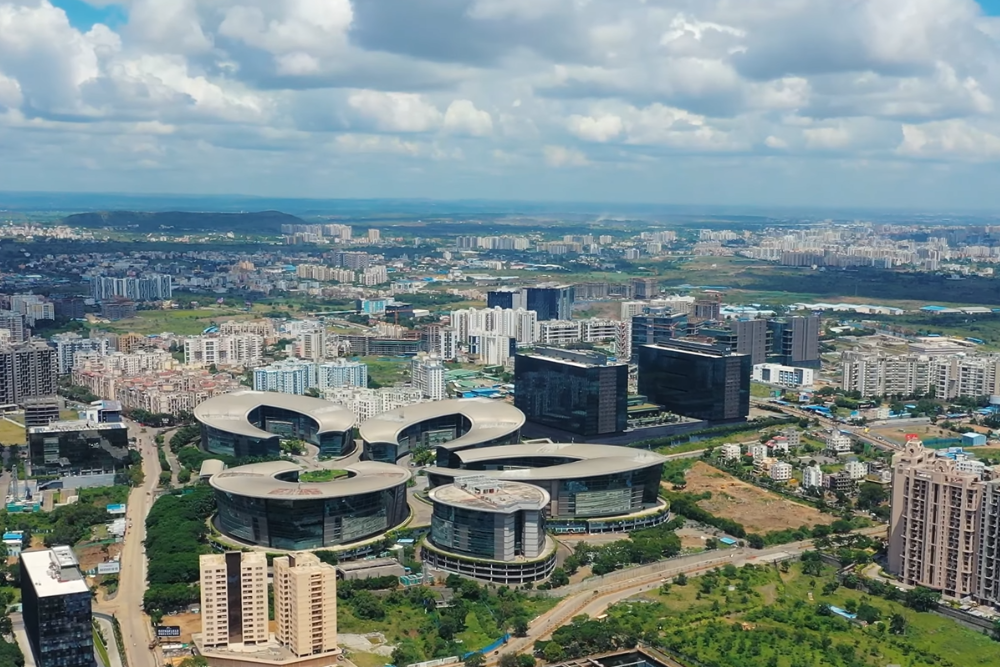
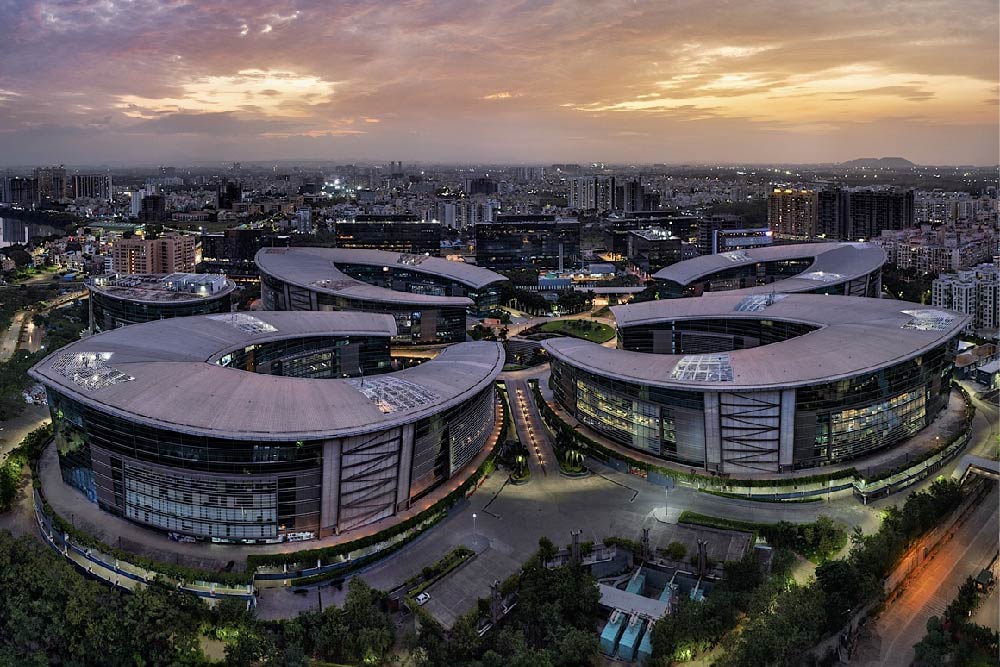 In a micro-market like Kharadi, near-possession launches are attracting first-time buyers and investors alike, while ready-to-move-in inventory continues to command a premium for immediate occupancy. Six years ago, around 2019–2020, 2-BHK apartments in Kharadi typically ranged between ₹55 lakh and ₹80 lakh, depending on proximity to major office hubs, developer reputation, and amenities. Today, the same configuration largely falls within the ₹85 lakh to ₹1.25+ crore bracket.
The area has witnessed meaningful appreciation, with current residential values generally ranging between ₹10,000 and ₹15,000 per sq.ft, compared to roughly ₹7,000 per sq.ft about six years ago, reflecting rapid growth supported by IT-led demand and infrastructure development.
Kharadi is also one of the few neighbourhoods in Pune that offers a unified residential journey within the same micro-market. Buyers can enter through compact studios priced around ₹45 lakh, move into 2-BHK homes in the ₹85 lakh to ₹1.25 crore range, and gradually upgrade to larger typologies such as 3, 3.5, and 4-BHK residences or penthouses priced between ₹3 crore and ₹10 crore. At the top end, international-style villas are available in the ₹14 crore to ₹35 crore range.
The micro-market continues to attract developer interest as well, with new supply being planned to cater to evolving demand. Notable among the upcoming developments is a new launch by Godrej Properties in Kharadi, expected to offer 2, 3, and 4-BHK homes. The entry of established developers at scale typically signals long-term confidence in a location and contributes to the overall strengthening of the residential market.
In a micro-market like Kharadi, near-possession launches are attracting first-time buyers and investors alike, while ready-to-move-in inventory continues to command a premium for immediate occupancy. Six years ago, around 2019–2020, 2-BHK apartments in Kharadi typically ranged between ₹55 lakh and ₹80 lakh, depending on proximity to major office hubs, developer reputation, and amenities. Today, the same configuration largely falls within the ₹85 lakh to ₹1.25+ crore bracket.
The area has witnessed meaningful appreciation, with current residential values generally ranging between ₹10,000 and ₹15,000 per sq.ft, compared to roughly ₹7,000 per sq.ft about six years ago, reflecting rapid growth supported by IT-led demand and infrastructure development.
Kharadi is also one of the few neighbourhoods in Pune that offers a unified residential journey within the same micro-market. Buyers can enter through compact studios priced around ₹45 lakh, move into 2-BHK homes in the ₹85 lakh to ₹1.25 crore range, and gradually upgrade to larger typologies such as 3, 3.5, and 4-BHK residences or penthouses priced between ₹3 crore and ₹10 crore. At the top end, international-style villas are available in the ₹14 crore to ₹35 crore range.
The micro-market continues to attract developer interest as well, with new supply being planned to cater to evolving demand. Notable among the upcoming developments is a new launch by Godrej Properties in Kharadi, expected to offer 2, 3, and 4-BHK homes. The entry of established developers at scale typically signals long-term confidence in a location and contributes to the overall strengthening of the residential market.
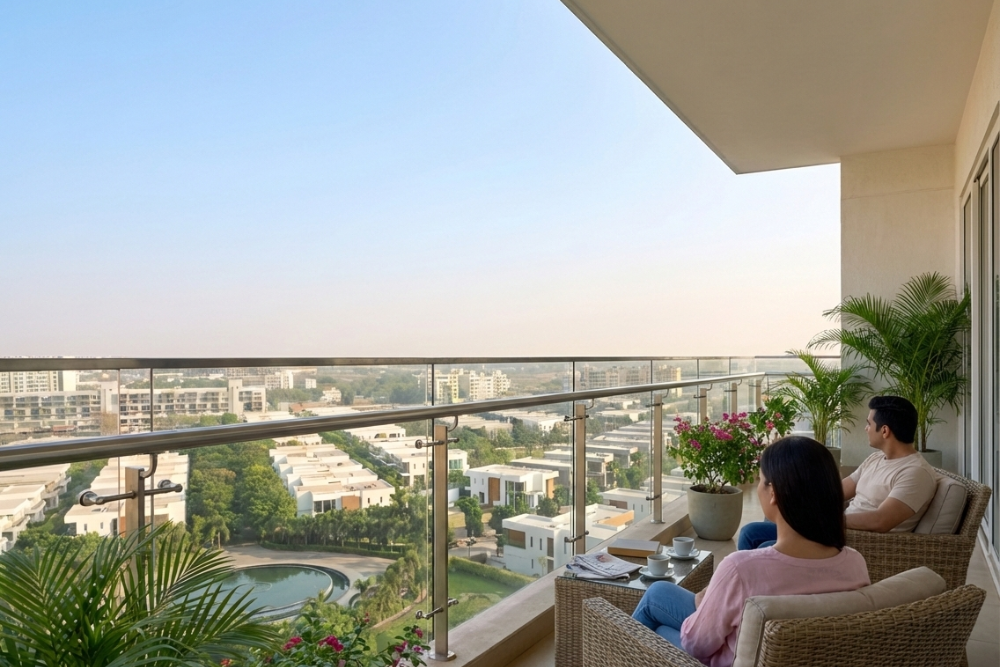 Kharadi’s growth is being shaped by fundamentals rather than short-term momentum. Strong employment visibility, improving infrastructure, sustained developer interest, and a wide range of residential options continue to support long-term housing demand.
For buyers evaluating 2-BHK homes with stable rental income, capital appreciation potential, and resale flexibility, Kharadi remains one of East Pune’s more dependable residential investment micro-markets.
To learn more, connect with us at hello@squarea.io or call +91 90 9641 9641.
Kharadi’s growth is being shaped by fundamentals rather than short-term momentum. Strong employment visibility, improving infrastructure, sustained developer interest, and a wide range of residential options continue to support long-term housing demand.
For buyers evaluating 2-BHK homes with stable rental income, capital appreciation potential, and resale flexibility, Kharadi remains one of East Pune’s more dependable residential investment micro-markets.
To learn more, connect with us at hello@squarea.io or call +91 90 9641 9641.