


Luxury living in India’s cities is no longer defined by square footage alone. As skylines evolve, prestige has come to mean far more than location or price. It now embodies privacy, experience, and design. From private elevators that offer exclusivity to sky decks that elevate leisure, high-value residences are increasingly expressions of lifestyle rather than mere ownership.
Developers are actively reimagining urban luxury through globally inspired amenities, creating homes that offer distinction as much as comfort. These new symbols of affluence signal a broader change, where luxury is no longer about ownership alone but the emotion and identity that come with it.
The Shift From Ownership To Experience
For India’s HNIs and UHNIs, luxury has transitioned from material to experiential. Prime location and architectural scale remain important, but what defines true luxury today is discretion, customisation, and access.
· Personalisation: From branded interiors to curated art and furnishings, customisation is now central to luxury identity.
· Privacy: Limited residences per floor, private foyers, and dedicated entrances offer exclusivity and discretion.
· Access: Concierge, wellness, and hospitality services integrate convenience with prestige.
This evolution has set the stage for amenities that prioritise comfort without compromise, starting with the most intimate of luxuries – privacy.
Once reserved for penthouses, private elevators and individual lobbies have become key features in luxury towers. They provide not just convenience but exclusivity. Developers in cities like Mumbai, Gurugram, and Pune are integrating dedicated lift systems and personal vestibules as standard in premium projects. For buyers, this feature represents both status and security, an unspoken symbol of social stature.
But as privacy becomes the norm, the next frontier of distinction is spatial, where panoramic views and elevated leisure define the experience of modern living.
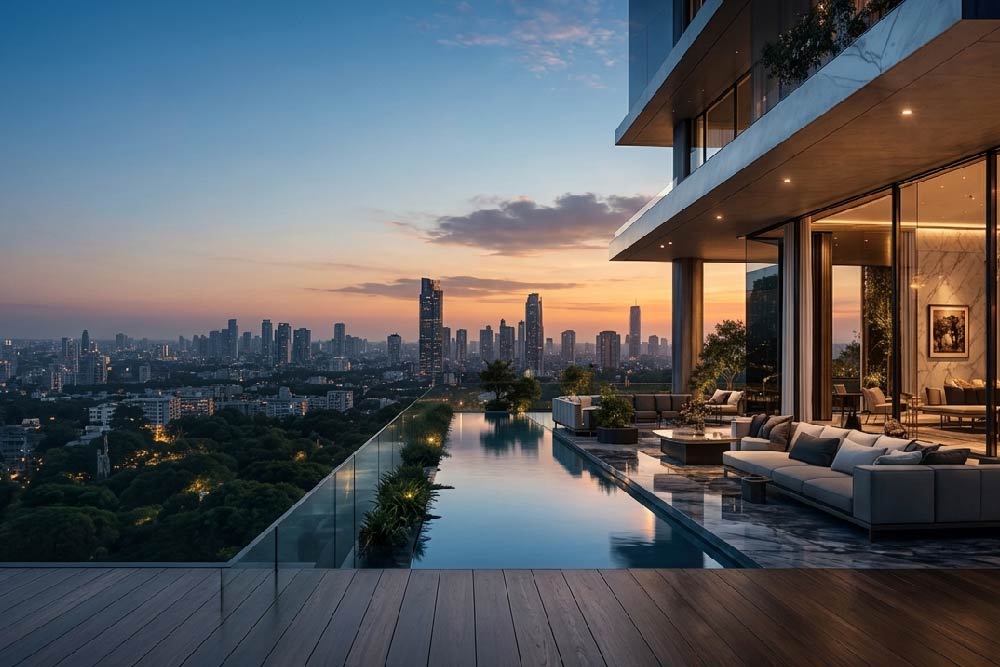
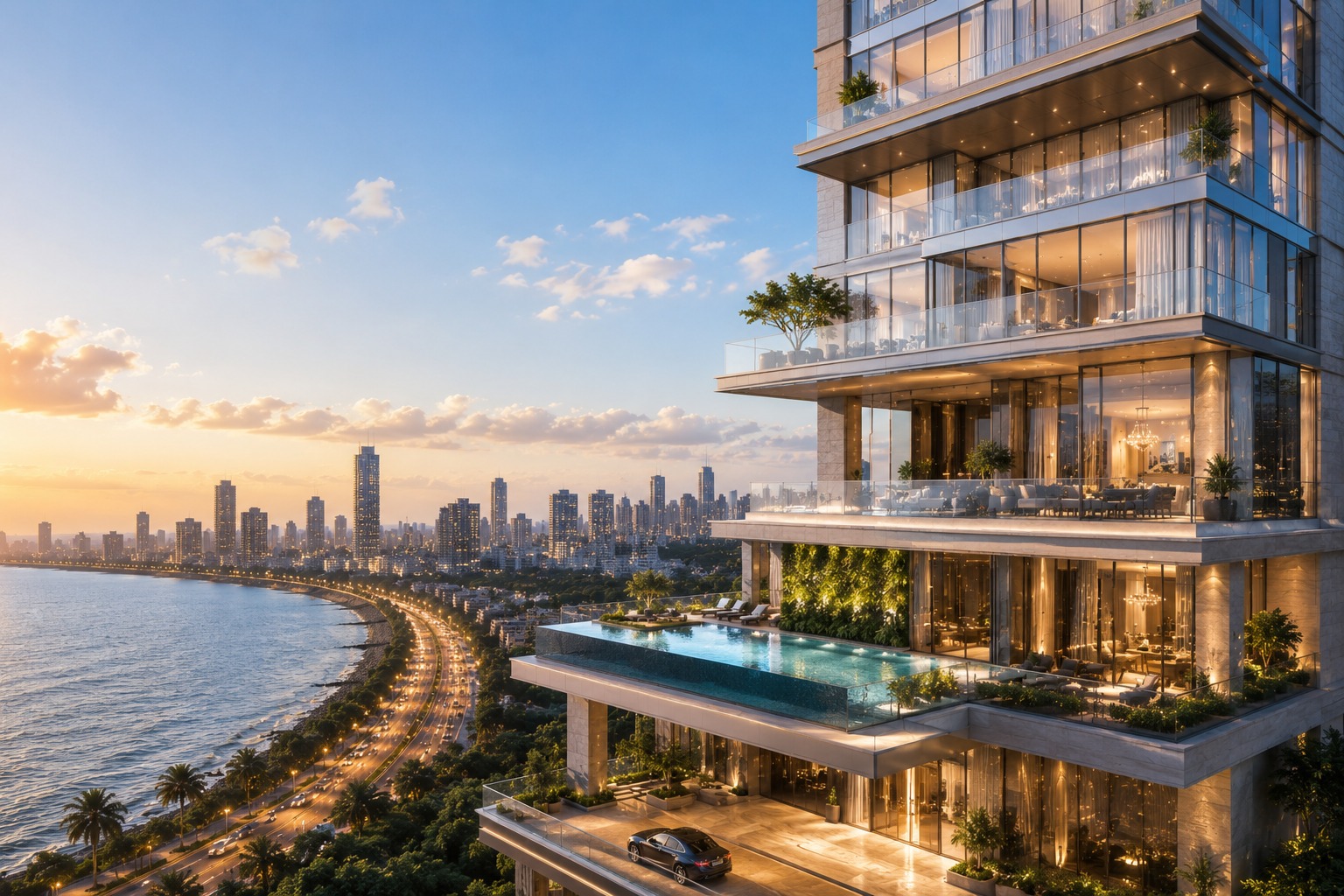
In dense urban skylines, open space has become the ultimate rarity. Sky decks, rooftop pools, and skyline lounges are redefining what leisure means in a vertical world. From infinity pools overlooking Worli’s seafront to sky lounges in Pune’s Financial District, developers are transforming rooftops into social sanctuaries. These spaces offer more than views. They provide a sense of calm, exclusivity, and elevation that no ground-level amenity can replicate.
Such vertical leisure concepts reflect a global shift where height equals distinction, and serenity comes from the skyline itself. As leisure moves upward, wellness is becoming the next cornerstone of aspirational living.
Modern affluent buyers are prioritising holistic wellness within their homes. From oxygen-enriched fitness studios to aromatherapy zones, residences are being crafted around physical and mental well-being.
Developers are increasingly responding to this demand and embracing biophilic design, integrating natural light, ventilation, and indoor greenery to promote calm and productivity. Fitness studios, meditation spaces, and spa suites further embed self-care into daily life. Beyond aesthetics, these choices address the growing awareness among HNIs of sustainability and lifestyle balance in urban environments.
The focus on wellness naturally aligns with sustainability, where luxury meets responsibility.
In a market increasingly shaped by innovation, technology has become the new measure of sophistication. Automated lighting, voice-controlled climate systems, and intelligent security solutions now define high-end living.
Sustainability, once considered niche, is now integral. IGBC and LEED-certified projects are setting benchmarks in energy efficiency, while eco-conscious materials and smart water systems ensure long-term value preservation. For HNIs, these features represent a commitment to both comfort and conscience, an evolved form of luxury where design meets responsibility.
This alignment of technology, sustainability, and wellness together is shaping the next chapter of Indian luxury housing.
India’s luxury segment continues to mature, led by developers who blend architectural excellence with global sensibilities. The modern homebuyer no longer seeks opulence alone. They seek meaning, identity, and a reflection of self.
Luxury is becoming quieter, more intentional, and infinitely more personal. The homes of tomorrow will be defined not just by grandeur but by their ability to offer peace, privacy, and permanence in a restless urban landscape.
At SQUAREA, we curate India’s most refined developments, from residences with sky decks and private lift access to wellness-led, sustainable homes that reflect individuality and balance. Each property is chosen for its design excellence, long-term value, and alignment with the evolving definition of modern luxury.
For personalised investment guidance, reach us at hello@squareaor call +91 90 9641 9641.