


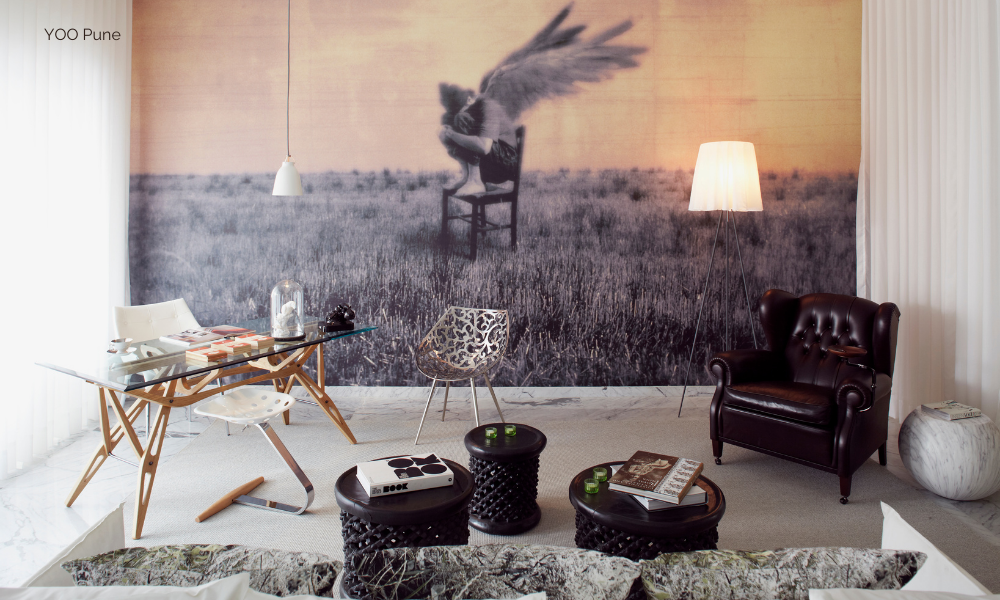
Branded residences are not just rewriting the contours of high-end real estate in India, they’re also redefining it into a distinctive investment category. These properties are rapidly shifting from rarefied luxury to offering an enduring, brand-backed investment that blends lifestyle and legacy.
Branded Residences differ from conventional luxury homes. These properties are associated with globally recognized brands, often from the hospitality sector but increasingly from the fashion, automotive, and lifestyle industries as well. They embody the brand’s signature service and design standards, creating a lifestyle experience rooted in exclusivity. Over the years, branded residences as a category have grown by over 170% and are expected to grow further (Savills 2020).
Initially, these residences were extensions of nearby hotels, providing exclusive hotel services such as concierge, valet, and housekeeping. The branded residences concept dates back to 1927, when New York’s iconic Sherry-Netherland Hotel partnered with the renowned Sherry’s restaurant, paving the way for today’s branded living experiences.
Over time, the branded residence concept evolved far beyond hospitality perks. They are celebrated across the world for their exclusivity, meticulous design, technology, world-class standard of living, and service excellence. Branded residences typically hold a 31% higher value than similar non-branded properties (Knight Frank 2012).Today, these homes include a suite of wellness and lifestyle amenities such as pools, spas, private dining, and even artfully curated experiences catering to the tastes of sophisticated buyers.
Non-hospitality brands like Versace, Armani, YOO, and Trump Towers have also entered the market, delivering a lifestyle rooted in the allure of a globally recognized brand, while blending world-class services. YOO has been a leading name in the non-hotel branded residences category, with 98 projects across 47 cities and 36 countries.
Branded Residences typically fall into two categories:
1. Standalone Branded Residences– These properties, often built without adjoining hotels, focus on providing exclusive living without shared hospitality amenities. Notable examples include the Trump Towers, YOO, Armani Residences, Bugatti Residences, and many more.
2. Integrated Branded Residences with Hotels – These projects feature both residential and hotel components, allowing residents to enjoy a wide range of hospitality services. Three Sixty West in Mumbai stands as a prime example, blending residential living with access to Ritz Carlton hotel amenities. Upcoming developments, such as the Westin Residences in Gurugram (set to be India’s largest branded residences project globally) and JW Marriott Residences in another major city, further exemplify this model.
Worldwide, there are over 105,000 branded residence units across 750 projects, with India capturing a 3% share of this market. By 2027, the number of these projects is expected to rise by nearly 60%, reaching around 1,200 projects (Economic Times, 2024).
Internationally recognized brands like YOO, Trump Towers, Marriott, Accor, Wyndham, Swarovski, along with leading Indian brands such as IHCL (Indian Hotels Company Limited) and Oberoi, are expanding their branded residences in India. While branded residences are already popular in cities like Mumbai, Delhi, and Pune, they are also expanding into emerging markets such as Bhubaneswar as India’s luxury property demand grows.
Bhubaneswar’s real estate market is set up for substantial growth, supported by a strong baseline of economic development and increasing demand for luxury living. The city is rapidly evolving as a hub for IT and education, attracting professionals and businesses. The interest in upscale living experiences reflects the region’s growing aspiration for elevated lifestyle choices, making Bhubaneswar an emerging luxury market with significant potential.
The launch of Odisha’s first branded residences, DN YOO Odisha, by DN Homes in collaboration with YOO and internationally acclaimed designer Philippe Starck, marks a new era for Bhubaneswar’s luxury real estate. Offering 3 and 4-bed branded residences across 3 three towers, this project offers state-of-the-art amenities such as 3 outdoor swimming pools, herb garden, sky gardens, sky terraces, an exclusive 44,000 sq.ft. clubhouse, etc. This project marks the third project of Philippe Starck in India and the first-ever in East India
The growth of India’s branded residences is strongly driven by the lifestyle expectations of high-net-worth individuals (HNWIs) who live globally and often own properties around the world. They now seek similar standards of design, architecture, technology, and service here in India, mirroring the experiences they enjoy internationally.
Over the past two decades, branded residences have secured a firm place in luxury real estate. Surviving the 2008 recession and demonstrating impressive recent growth, it seems like this concept is here to stay!
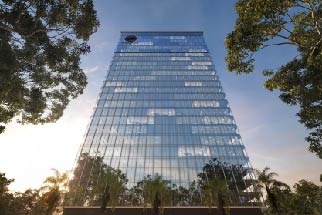
PUNE, India, May 26, 2025 /PRNewswire/ — Pune’s commercial real estate market has been on a steady rise, with the city recording an 8 million sq. ft. leasing volume in 2024, reflecting a 19% year-on-year increase (Knight Frank, 2025). At the heart of this growth is Kharadi – a neighborhood that has transformed from a developing suburb to one of Pune’s most sought-after business districts. With its strong connectivity to IT hubs, residential areas, and the City’s central business district (CBD), Kharadi has become a magnet for companies seeking well-connected international-standard office spaces.
With a mix of established IT parks, premium residential projects, and upcoming commercial developments, the business district has seen notable leasing transactions with brands the likes of Citicorp, BNY Mellon, Hines, Amazon, and Deloitte, within the same micro market. This demand can be understood through two significant metrics: an influx of approximately 5 lacs of global professionals and additional leasing demand of over 20 million sq. ft., which will position Kharadi among India’s leading commercial hubs.
Amidst this rising demand, SQUAREA has consistently been involved in connecting institutions, corporates and HNI-investors with their requirement for size appropriate Grade-A high-yield commercial assets.
Through its extensive network, market understanding, and client-centric approach, SQUAREA has led the rally as a strategic partner for HNIs and commercial focused investors.
With the new Grade-A commercial landmark in Kharadi titled ‘Omicron Business Landmarks Kharadi NX’ – Omicron Group has partnered with SQUAREA as the exclusive sales and marketing partner. This collaboration comes at a time when corporates and MNCs are actively seeking high-end offices in the large-to-medium format, and Kharadi lies at the heart of this growth story.
With a corporate track record spanning over three decades, Omicron Group is known for its commitment to ethics, quality, and timely delivery. Omicron Group has delivered commercial spaces which balance international standard functionality with contemporary aesthetic appeal, earning the respect of the industry, and its investors alike.
Placed in the center of the affluent neighbourhood in Kharadi — Omicron Business Landmarks Kharadi NX is an architectural landmark designed for modern enterprises. Rising to 26 levels on completion with a built-up area of approx. 3.6 lacs sq. ft., the development offers 20 floors of scalable Grade-A office spaces ranging from 899 sq. ft. to full floor plates of 12,400 sq. ft. Its iconic glass façade, 360-degree views of the vibrant cityscape, and serene riverside views make for a rich visual experience, while its Vastu-compliant spaces and pre-IGBC certified design ensure sustainability and long-term relevance.
Aside from the design aspects, Kharadi NX tower is a hub of workplace experiences. The tower is equipped with 9 high-speed elevators, 9 levels of parking, and advanced security systems. A rooftop amenity zone with rooftop cafeteria and rooftop fitness area provides a perfect setting for modern-day work-life balance, while state-of-the-art facilities like conference room, training room, and a dedicated business lounge makes it an ideal choice for fast-growing businesses.
SQUAREA’s long-standing involvement in Kharadi, combined with its expertise in Grade-A Commercial Real Estate, is expected to play a pivotal role in ensuring the success of this new commercial tower project. For businesses looking for a right-sized asset at a strategic location – Omicron Business Landmarks offers a compelling investment proposition. Readers can note that the project is registered under MahaRERA No.: P52100053519, and more details are available at: https://maharera.mahaonline.gov.in Photo: https://mma.prnewswire.com/media/2695935/Modern_workplace_amenities.jpg Photo: https://mma.prnewswire.com/media/2695934/Grade_A_Commercial_tower.jpg (Disclaimer: The above press release comes to you under an arrangement with PRNewswire and PTI takes no editorial responsibility for the same.).
India’s ultra-high-net-worth individuals (UHNIs) are refining their investment approach toward commercial real estate (CRE). The reassessment currently underway is a strategic recalibration of how capital is deployed, into what it is deployed, and the role commercial real estate plays in a future-proofed portfolio.
Several macro and structural trends are fuelling this shift:
Together, these forces represent a fundamental repositioning. CRE is no longer viewed in isolation as a high-yielding asset. It is now being evaluated as a strategic wealth tool, one that must perform across cycles, align with ESG norms, and support liquidity and succession planning. The reassessment is not about exiting the market, it is about upgrading the playbook. Let’s delve into each aspect shaping this transition.
The first visible shift is a clear move from aggressive expansion to strategic consolidation. Earlier, UHNIs were key participants in land aggregation and greenfield office investments. Today, they are narrowing their focus to high-performing, fully built, income-yielding Grade A assets.
This reflects not just a change in risk appetite, but in investment philosophy. Asset quality, tenant profile, and compliance readiness have taken precedence over speculative upside.
This recalibration is supported by market data. Capital deployment into Indian real estate reached USD 11.4 billion in 2024, a 54% year-on-year growth, largely driven by completed assets and well-located land acquisitions (CBRE).
The new mandate is clear: fewer assets, stronger fundamentals, and consistent rental performance. The next layer of this shift involves how UHNIs prefer to own these assets.
Alongside asset preference, the structure of ownership itself is transforming. UHNIs are moving away from direct, individually held assets or co-invested fragments in family partnerships. Instead, they are leaning into institutional models like REITs, Alternative Investment Funds (AIFs), and managed discretionary platforms.
These structures offer several advantages:
A prime example of this evolution is the scale at which REITs are being capitalised. Embassy Office Parks REIT, India’s largest, has announced plans to raise USD 400 million to meet growing demand for institutional-grade office assets (Reuters).
For UHNIs, these platforms deliver transparency, reduced administrative burden, and exposure to well-performing assets without operational complexity. But ownership models are only one part of the equation, asset performance is increasingly being driven by sustainability metrics.
Environmental, Social, and Governance (ESG) factors have moved from being soft preferences to hard investment filters. Whether driven by SEBI’s Business Responsibility and Sustainability Reporting (BRSR) norms or global LP mandates, ESG now shapes portfolio construction.
As of end-2024, 66% of Grade A office stock across India’s top six cities was green-certified, amounting to 503 million sq ft. More notably, over 75% of all leasing in 2024 took place in green-certified buildings, underscoring a structural market shift, not a passing trend (Colliers).
This growing preference for sustainable assets is not confined to new supply. Developers are actively retrofitting older buildings to improve ESG scores, unlocking a market opportunity worth over INR 425 billion (Colliers). This ESG integration is not only about compliance. It is now a strategic lever for:
Air quality monitoring, energy efficiency systems, waste reduction, and wellness infrastructure are now prerequisites for future-ready CRE portfolios. This reorientation towards quality and compliance also aligns with a deeper concern: preparing assets for smooth intergenerational transfer.
A critical driver behind the reassessment is the growing need for estate readiness and wealth continuity. UHNIs are increasingly viewing CRE through the lens of transferability, ease of governance, and long-term asset hygiene.
Family offices are prioritising:
This is particularly relevant as the first generation of Indian wealth transitions to the next. Structures that offer transparency, liquidity, and minimal transfer friction are being favoured over legacy holdings that are operationally burdensome or non-compliant. CRE is no longer just a source of income, it is now also a critical estate planning tool.
As India's commercial real estate evolves, UHNIs are sharpening their lens, filtering for transparency, yield resilience, and ESG alignment. The shift is not about cutting exposure, but about elevating the quality of exposure.
At SQUAREA, we specialise in helping investors navigate this next cycle. From REIT entry strategies to pre-leased Grade A assets and co-investment platforms, our advisory ensures alignment with your long-term capital goals and risk appetite.
To learn more or build your next strategic CRE allocation, connect with us at hello@squarea.io or call +91 90 9641 9641.
Dubai is no longer just a regional powerhouse. It has become a magnet for global wealth migration. With over 7,200 millionaires relocating to the UAE in 2024 alone (Henley & Partners), the city continues to attract global citizens seeking more than just a residence. They are drawn by the promise of long-term value, enhanced security, and greater global mobility.
This movement is mirrored in Dubai’s real estate performance, particularly in the ultra-luxury space. From waterfront addresses like Palm Jumeirah to the estates of Emirates Hills, Dubai has emerged as one of the world’s most desirable second-home markets.
The continued inflow of global wealth is directly influencing Dubai’s prime real estate transactions. These are not short-term purchases, they are strategic moves by UHNWIs securing global bases for family and capital. Supporting this trend are record-setting figures:
These exceptional figures reflect not just transactional momentum but the deeper structural advantages that continue to position Dubai as the preferred second-home destination for global investors.
What makes Dubai stand out among other international hubs like London, Singapore, or New York? The answer lies in a combination of access, security, tax neutrality, and lifestyle quality, each carefully embedded into the city’s long-term master plan.
These frameworks offer the predictability, control, and legal clarity that high-net-worth individuals expect when allocating capital across borders.
This commitment to quality of life ensures Dubai meets the expectations of discerning residents seeking security, comfort, and day-to-day efficiency.
This strategic geographic positioning reinforces Dubai’s appeal as a seamlessly connected global hub, an essential factor for mobile, asset-diverse investors.
This foundation of monetary and legal stability makes Dubai a credible, future-ready base for strategic asset holding.
These elements make Dubai more than just a part-time residence. It becomes a second base for entertaining, living, and integrating family, leisure, and business with ease.
Dubai’s rise as a preferred second-home destination is no coincidence, it is the result of deliberate, long-term planning around ownership freedom, tax neutrality, and global connectivity. As millionaire migration and wealth redistribution accelerate globally, Dubai is setting a new benchmark for what a second home can represent.
At SQUAREA, we offer discerning investors access to Dubai’s most coveted residential assets, from waterfront villas to branded residences, curated to align with both lifestyle aspirations and capital strategy.
For bespoke opportunities, contact us at hello@squarea.io or call +91 90 9641 9641.